Shower waterproofing: why the tile is not the waterproof part
A failed shower doesn't announce itself. It shows up as a stain on the ceiling below, months after the tile looked perfect — and by then the repair runs $15,000–40,000. The waterproofing you never see is the cheapest insurance in the bathroom.
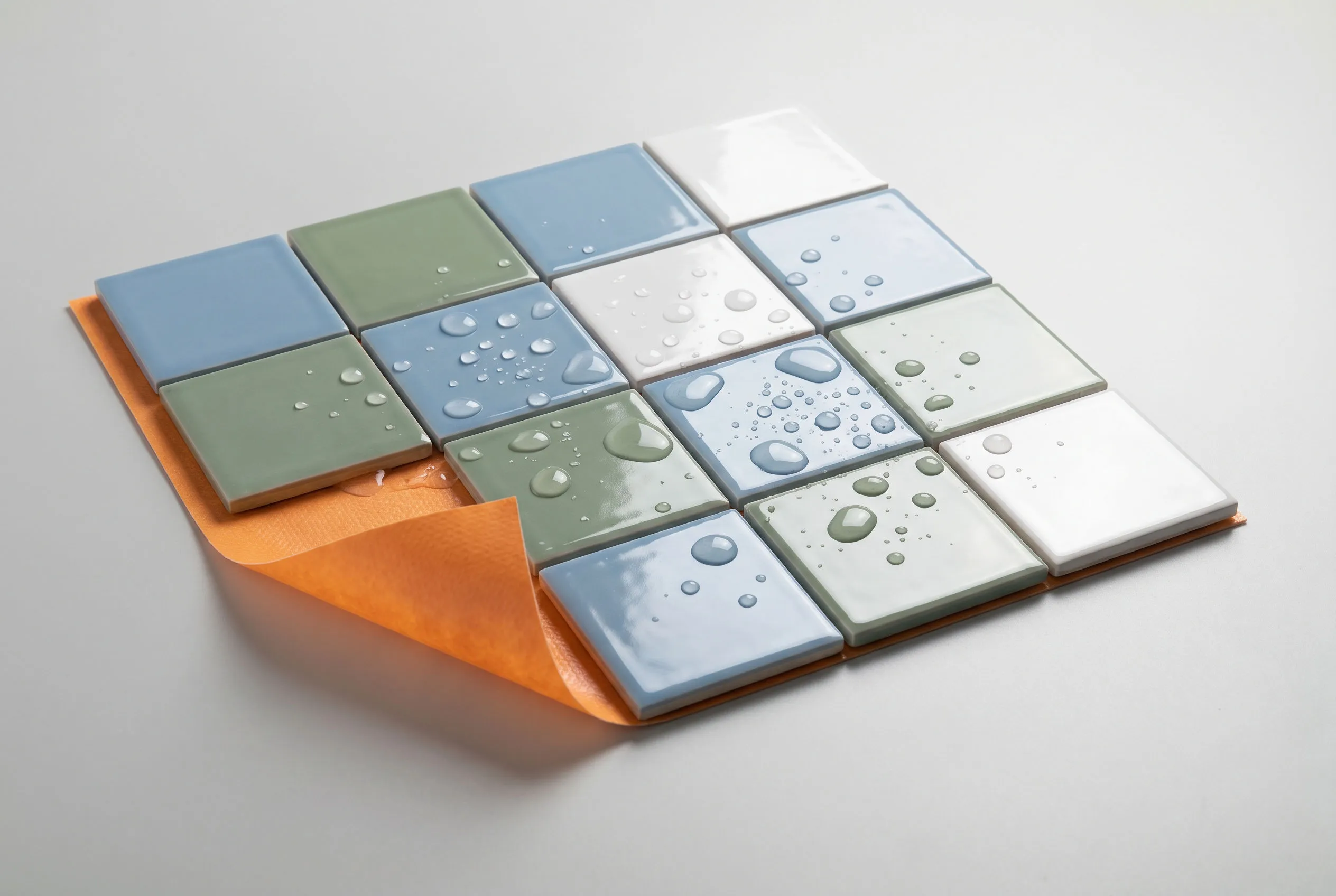
A failed shower doesn’t announce itself. It shows up as a stain on the ceiling below, or a soft spot in the floor, long after the tile looked perfect — and by then the repair runs $15,000–40,000. The waterproofing you never see is the cheapest insurance in the whole bathroom. Here’s how it actually works.
The thing most people get backwards
Tile is not waterproof. Grout is not waterproof. Water moves through both — slowly, but it moves. What keeps your shower from rotting the wall behind it is a membrane you never see, installed under the tile.
The tile is the finish. The membrane is the shower.
What a leak actually costs
The bill is almost entirely a function of how long it went unnoticed:
| What failed | Typical outcome |
|---|---|
| A regrout that never fixed the cause | leaking again within a year |
| Water behind the tile, one wall | a few thousand to rebuild |
| Rot into the framing or the floor below | $15,000–40,000 |
Waterproofing done right and waterproofing skipped look identical for years. Then one becomes the most expensive room in the house.
How it’s supposed to work
A waterproof membrane — we use Schluter Kerdi — is bonded over the substrate before any tile goes up. The seams and inside corners are sealed so the entire wet area becomes one continuous waterproof surface behind the tile. Then the pan gets a flood test: fill it, leave it, and prove it holds before a single tile is set.
That last step is the one that separates a shower built to last from one built to look finished. You can’t flood-test a wall after it’s tiled.
Why “just re-grout it” never fixes a leak
If water is getting behind the tile, new grout is lipstick. The water isn’t coming through the grout lines you can see — it’s already past them, moving through a membrane that failed or was never installed. Re-grouting buys a season. Finding the actual breach and rebuilding the wet area is what fixes it — which is the whole point of tile repair & regrout done properly, cause first.
You don’t always have to gut the bathroom
Here’s the part that relieves most people: if the failure is in the shower, the wet area can be rebuilt on its own. The vanity, the floor tile, the rest of the room can stay. Whether that’s possible comes down to how far the water has already travelled — which is exactly why catching it early is worth so much.
If something in your shower is telling you it’s time, bathroom tile & waterproofing is where the fix starts.