What does a heated tile floor cost in Calgary?
An electric heated floor adds about $8–15 per square foot on top of the tile. In a city where the floor is cold half the year, it's the upgrade people regret skipping — not adding.
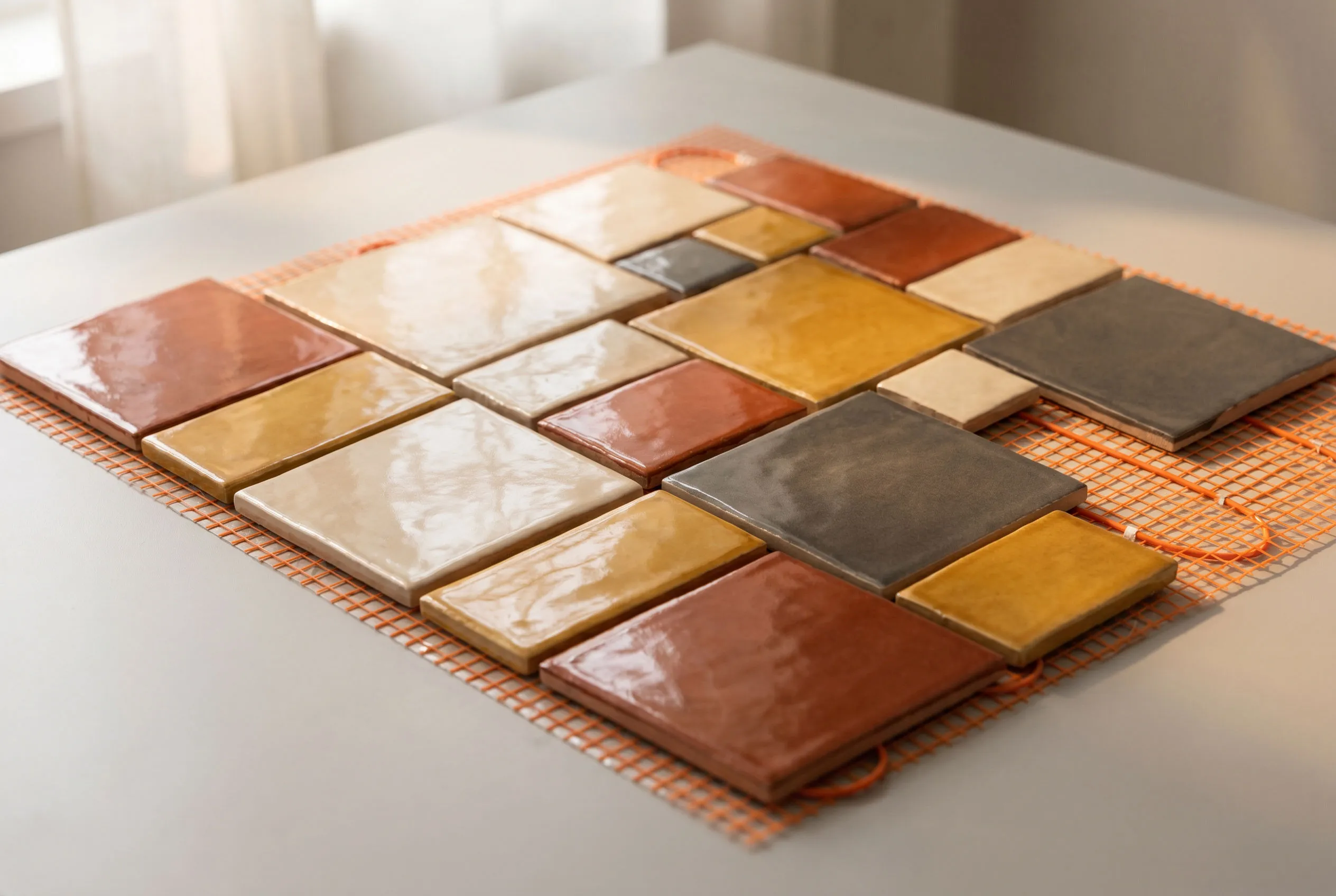
A heated tile floor in Calgary runs about $8–15 per square foot on top of the tile. In a climate where the floor is cold half the year, it is the upgrade people regret skipping — not the one they regret adding. Here is what it costs, and when it earns its keep.
The short answer
The electric mat and the labour to embed it add $8–15 per square foot to a tile floor. Because it heats a defined area, the cost scales with the room:
| Room | Heated area | Added cost |
|---|---|---|
| Ensuite floor | ~50 sq ft | $400–750 |
| Main bathroom | ~100 sq ft | $800–1,500 |
| Kitchen / entry | ~250 sq ft | $2,000–3,750 |
One thing to be clear about up front: this is an add-on to a new tile floor. The mat goes down as part of the install — it can’t be slipped under tile that’s already set.
Why it’s worth more here than almost anywhere
Most of the year, tile is the coldest surface in a Calgary house. That’s exactly what makes it a good floor — it holds up to slush, salt, and freeze-thaw that would wreck other flooring — but it also means bare feet meet a cold surface from October to April.
A heated floor doesn’t just take the edge off. It turns the one material built for this climate into the most comfortable floor in the house. It won’t pay for itself on your power bill — it heats a small area, only when you want it, so it’s cheap to run but not a saving. It pays for itself the first frozen morning your feet don’t flinch.
The grout question the forums keep asking
Search “best grout for a heated floor” and you’ll find the same worry every time: the floor heats and cools, and things that heat and cool move. They’re right. That daily movement is what opens hairline cracks in ordinary cement grout, right along the joints.
The answer is epoxy grout, which we use as standard anyway. It flexes with the floor instead of cracking at it, never needs resealing, and shrugs off the moisture a bathroom throws at it. On a heated floor it isn’t a nicety — it’s the difference between grout lines that last and grout lines that craze in a season.
There’s no second chance under the tile
Once the tile is set, the mat is sealed away for good. So the only place to catch a fault is before the thinset cures — which is why the mat is checked for continuity before it goes down, again once it’s embedded, and once more after the tile is laid. Three checks, because a dead spot found on day one is a fix, and a dead spot found in January is a demolition.
When it makes sense — and when it doesn’t
- New tile floor going in anyway — yes. The marginal cost is small and the timing is exactly right.
- Bathroom, ensuite, entryway, kitchen — the rooms where bare feet meet tile are the rooms that reward it.
- Tile you already have and like — no. Heating can’t go under a floor that’s already down without lifting it first.
If a new tile floor is in your plans, the warm-floor upgrade is a small decision with a daily payoff — see heated floor installation for how it goes in.